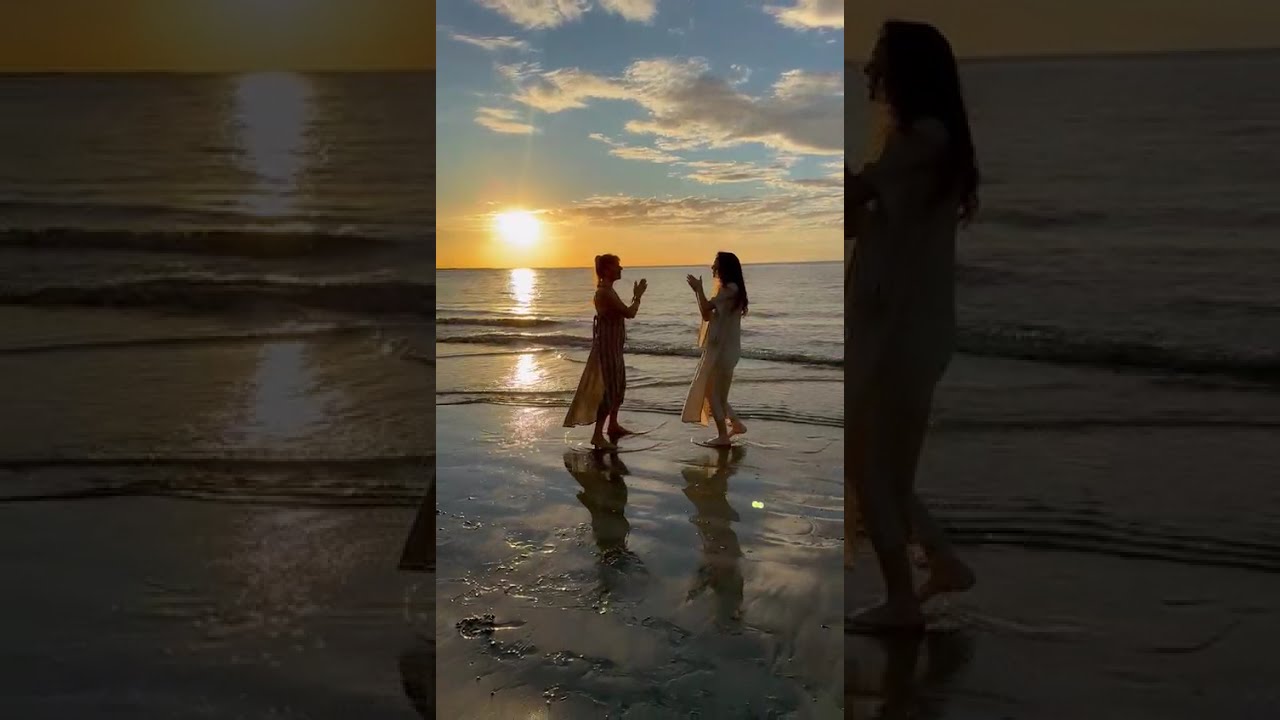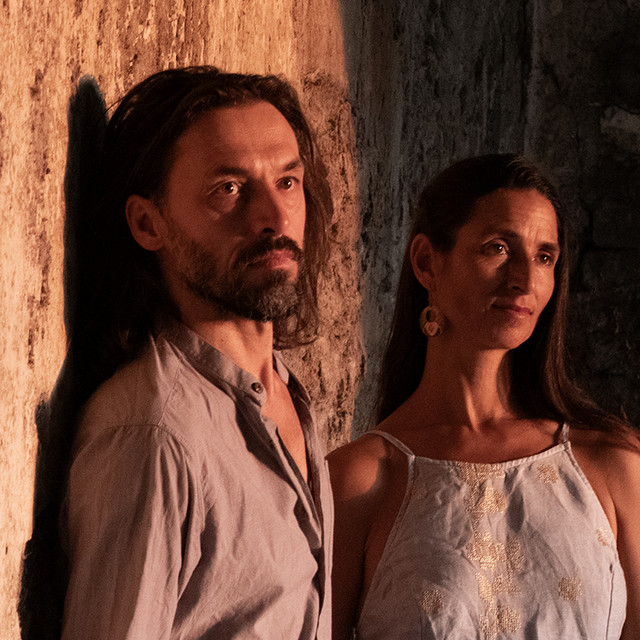
Mirabai Ceiba performs the traditional Ajai Alai kirtan, a devotional chant rooted in Sikh and Hindu bhakti traditions. The piece invokes the formless, deathless divine through layered Sanskrit and Punjabi sacred syllables, exploring themes of eternity, shapelessness, and the union of form and formlessness. The live performance from Madrid (October 2010) showcases how kirtan uses repetition, call-and-response, and melodic variations to create states of meditative absorption and devotional surrender.
What is Ajai Alai and its role in bhakti tradition?
Ajai Alai is a classical North Indian devotional chant that draws from both Sikh and Hindu bhakti music traditions. The opening invocation—"Ajai Alai" (आजै अलै)—translates roughly to "unconquerable, indestructible," pointing to the formless, eternal nature of the divine that lies beyond death, decay, and material form. This kirtan appears in Sikh liturgy and has been adopted and reinterpreted by contemporary bhakti musicians like Mirabai Ceiba, who bring the tradition forward through modern musical arrangements while preserving its devotional essence.
The kirtan operates as a devotional practice rather than a performance in the secular sense. In bhakti tradition, kirtan—the singing of God's names and attributes—is understood as a direct path to the divine. The repetition of sacred syllables and the collective singing create what practitioners call rasa: the emotional and spiritual atmosphere in which the singer and listener dissolve the boundary between self and the object of devotion. Mirabai Ceiba's interpretation honors this lineage while adding contemporary harmonic depth and global musical influences.
What Sanskrit and Punjabi concepts structure the chant?
The lyrics of Ajai Alai layer multiple Sanskrit and Punjabi words that point to different dimensions of the divine. The foundational invocation—"Ajai Alai"—establishes the supreme being as formless and indestructible. As the chant unfolds, other concepts emerge:
- Akaal (अकाले): Literally "without time" or "timeless." This refers to the divine as transcending temporal existence, beyond the cycles of birth and death. Akaal emphasizes the eternal nature of consciousness itself.
- Amoni (अमोनी): A variant form meaning "deathless" or "immortal." It reinforces the theme of the divine as beyond mortality and decay.
- Aja (अज): Meaning "unborn," this attribute suggests the divine was never born and therefore can never die—it exists beyond the laws of causation that govern the material world.
- Raga and Ranga (रंग): References to color, hue, and emotional tone. In bhakti language, raga can mean both the musical mode and the emotional absorption in devotion. The chant plays with the paradox that the formless divine appears in infinite forms and colors throughout creation.
- Rupa and Reke (रूप, रेके): Form and outline. The chant engages the tension between form and formlessness—how the shapeless divine manifests as the visible universe while remaining beyond all shape.
These concepts are not merely intellectual—they are sung, repeated, and internalized. The listener's attention is invited to move through layers of meaning: from the formless to the formed, from the eternal to the temporal, and back again. The kirtan becomes a meditation on paradox, inviting the practitioner to hold contradictory truths simultaneously.
How does repetition and call-and-response function in the performance?
Mirabai Ceiba's live performance in Madrid demonstrates the essential structure of kirtan: call-and-response, melodic variation, and rhythmic acceleration. The singer initiates a phrase—"Ajai Alai"—and the audience or musicians respond. This back-and-forth is not merely musical exchange; it is a collective invocation, a shared call to presence and surrender.
The repetition serves multiple functions. First, it creates a mantric effect: by repeating sacred syllables and names, the mind's discursive chatter quiets, and awareness becomes absorbed in the sound vibration itself. The Sanskrit concept of mantra (मन्त्र) literally means "that which protects the mind." Repetitive chanting protects consciousness from distraction by anchoring it to sacred sound.
Second, repetition allows for melodic and emotional deepening. As a phrase is sung multiple times, musicians explore different registers, harmonies, and rhythmic emphases. A simple phrase like "Sin, sin, sin" (सिन) gradually accumulates emotional weight and texture, inviting listeners to release rational thought and enter a state of feeling-based awareness. This is the bhakti path: not primarily intellectual understanding, but surrender through sound and emotion.
Third, the call-and-response structure dissolves the boundary between singer and listener. In the traditional kirtan circle, everyone is both invoking and being invoked. The individual "I" becomes less important than the collective field of devotion. Mirabai Ceiba's multicultural audiences—evident from the Madrid performance—experience this dissolution regardless of linguistic or cultural background; the human nervous system responds to sacred sound similarly across cultures.
What is the role of formlessness and shapelessness in this devotional framework?
One of the central paradoxes in Ajai Alai is the simultaneous invocation of formlessness and the infinite multiplicity of forms. The divine is "Ajai Alai"—beyond destruction, beyond time—and yet it manifests as the entire visible universe. The chant does not resolve this paradox intellectually; instead, it holds it through sound.
In non-dualist Hindu and Sikh philosophy, the relationship between Nirguna Brahman (the formless, attributeless absolute) and Saguna Brahman (the divine with qualities and form) is not one of separation but of simultaneous truth. The divine is both utterly transcendent and intimately present in every form. Ajai Alai enacts this dual realization through its lyrics and melody.
The references to "raga" and "rupa" (color and form) are particularly significant. Rather than rejecting form as illusion, bhakti celebrates form as the divine's self-expression. To sing "Ajai Alai"—the formless—while simultaneously acknowledging "rupa," "reke," and "rang" (form, outline, color) is to recognize that the material world and the spiritual absolute are not in opposition. This is liberation not through denying the world, but through recognizing the divine nature of all manifestation.
How does Mirabai Ceiba's arrangement honor traditional kirtan while expanding its reach?
Mirabai Ceiba (the duo of María de los Ángeles and Thomas Ashvöl) emerged from the global bhakti revival that began in the 1960s and accelerated through the rise of kirtan as a meditative and congregational practice in Western spiritual communities. Their approach to Ajai Alai preserves the essential structure and lyrical content of the traditional chant while integrating contemporary harmonic sensibilities and world music instrumentation.
In this live performance, the foundational melody is recognizable to anyone familiar with the traditional form, yet the layering of voices, the instrumental accompaniment, and the dynamic pacing invite modern listeners into the devotional space without requiring prior knowledge of Sanskrit or Punjabi. This is not watering down the tradition; rather, it is extending its accessibility while maintaining its depth.
The performance also reflects the understanding that kirtan is a living practice, not a museum artifact. Spiritual teachers and musicians have always adapted the form to their times, instruments, and audiences. By bringing Ajai Alai to audiences in Madrid and beyond, Mirabai Ceiba honors the tradition's fundamental aim: to invoke the divine presence and create spaces of collective awakening across any boundary of culture, language, or belief.
Where to go from here
If you are drawn to Ajai Alai, consider exploring the broader context of North Indian kirtan traditions—both Sikh kirtan and Hindu bhakti music. Read or listen to the Adi Granth (Sikh holy text) and its musical teachings, or engage with classical devotional poets like Kabir and Mirabai, whose work shares similar themes of formless devotion. If you wish to practice kirtan, attend live performances in your area or explore recordings by Mirabai Ceiba and other contemporary kirtan musicians who work across traditions. The deepest learning comes through participation: sitting in the circle, adding your voice, and allowing repetition and collective sound to quiet the mind and open the heart.