EveryEvent Amsterdam

Browse All Events

Find every event in Amsterdam

events

Concerts & Live Music
Festivals
Sports & Recreation
Food & Drink
Arts & Culture
Community
Family & Kids
Nightlife
Comedy
Theater
Popular Destinations
BaliSedonaLos AngelesCosta RicaNew YorkSan FranciscoAustinMiamiJoshua TreeTulum
View All CategoriesView All Destinations

Explore All Features

Powerful tools to grow your events

Platform Features

Smart Dynamic Pricing
Ticket Categories
Assigned Seating
Abandoned Cart Recovery
Visitor Recovery
Donations & Sliding Scale
Affiliate Engine
Ticket Scanner
Coupon Codes
Custom Questions
Ticket Sharing
Upsells & Add-ons
Analytics & Reporting
Email Sequences
Waitlist / Notify / Remind
Explore
Discovery HubArtists & PerformersVenuesKnowledge Base
View All FeaturesAbout Us
PricingBlog
Language
Saved events
Browse All Events

events

Concerts & Live MusicFestivalsSports & RecreationFood & DrinkArts & CultureCommunityFamily & KidsNightlife

Popular Destinations

BaliSedonaLos AngelesCosta RicaNew YorkSan Francisco

Explore

Discovery HubArtists & PerformersVenuesKnowledge Base

Platform Features

Smart Dynamic PricingTicket CategoriesAssigned SeatingAbandoned Cart RecoveryVisitor RecoveryDonations & Sliding ScaleAffiliate EngineTicket ScannerCoupon CodesCustom QuestionsTicket SharingUpsells & Add-onsAnalytics & ReportingEmail SequencesWaitlist / Notify / Remind
View All FeaturesAbout Us
PricingBlog
Log inSign UpEvent Organizers
  • Browse All Events
  • Concerts & Live Music
  • Festivals
  • Sports & Recreation
  • Food & Drink
  • Arts & Culture
  • Community
  • Family & Kids
  • Nightlife
  • All Categories →
  • All Destinations →
  • For Promoters
  • For Artists
  • For Venues
  • For Festivals
  • For Event Spaces
  • For Nonprofits
  • For Bloggers
  • For Speakers
  • Brand Ambassador
  • Case Studies
  • 350K+ Buyer Network
  • Abandoned Cart Recovery
  • Smart Dynamic Pricing
  • Ticket Categories
  • Recurring Events
  • Assigned Seating
  • Affiliate Engine
  • Waitlist / Notify
  • Ticket Scanner
  • Embed Widget
  • Event Syndication
  • Message Center
  • Integrations
  • Reports
  • All Features →
  • About
  • The Ecosystem
  • Blog
  • Glossary
  • Inspiration
  • Help Center
  • Contact
  • API Docs
  • Brand Assets
  • Careers
  • Press
  • Terms of Service
  • Privacy Policy

Events

  • Browse All Events
  • Concerts & Live Music
  • Festivals
  • Sports & Recreation
  • Food & Drink
  • Arts & Culture
  • Community
  • Family & Kids
  • Nightlife
  • All Categories →

Getaways

  • All Destinations →

For Organizers

  • For Promoters
  • For Artists
  • For Venues
  • For Festivals
  • For Event Spaces
  • For Nonprofits
  • For Bloggers
  • For Speakers
  • Brand Ambassador
  • Case Studies

Features

  • 350K+ Buyer Network
  • Abandoned Cart Recovery
  • Smart Dynamic Pricing
  • Ticket Categories
  • Recurring Events
  • Assigned Seating
  • Affiliate Engine
  • Waitlist / Notify
  • Ticket Scanner
  • Embed Widget
  • Event Syndication
  • Message Center
  • Integrations
  • Reports
  • All Features →

Company

  • About
  • The Ecosystem
  • Blog
  • Glossary
  • Inspiration
  • Help Center
  • Contact
  • API Docs
  • Brand Assets
  • Careers
  • Press
  • Terms of Service
  • Privacy Policy
EveryEvent
© 2026 EveryEvent Amsterdam. All rights reserved.
Inspiration

Awakening From Illusion: FreedomThrough Spiritual Wisdom

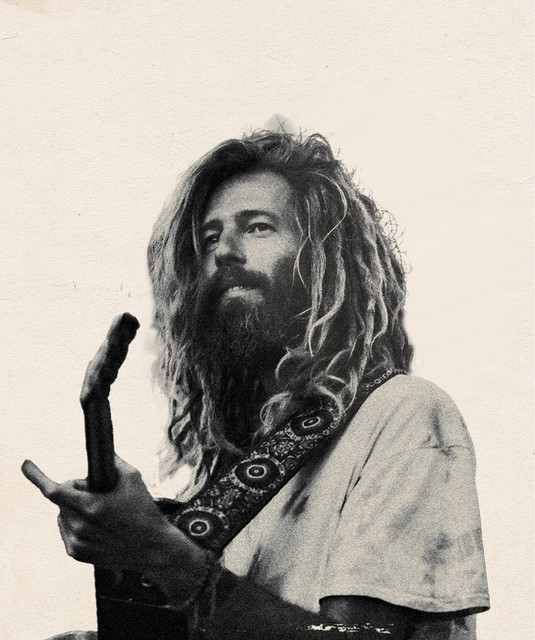
Sam Garrett
Sam Garrett
Sep 15, 2025
6 min read
Watch · 5

"Be Free," from Sam Garrett's album One Family, is a devotional music piece that explores the central spiritual challenge of distinguishing illusion from reality. The song teaches that awakening requires recognizing false beliefs we've been sold, developing wisdom to discern truth, and practicing gratitude for the natural world and breath as anchors to freedom. Rather than a philosophical lecture, the song works through repetition, melody, and the speaker's own journey from confusion to detachment—watching the world's rise and fall without being caught in its currents.

Read · 7 sections

What Does It Mean to "Awake From the Dream"?

The opening lines of "Be Free" establish its central inquiry: "Oh the most high arises. I awake from my dream / Only to find that it's not what it seems" (39s). This is not a call to literal consciousness but to a specific kind of spiritual awakening—the recognition that the world we assume to be solid, permanent, and as it has been presented to us is actually a constructed set of beliefs.

Garrett frames this awakening as a shock. The dreamer expected one reality and found another. This gap between expectation and truth is the beginning of liberation, not the end. The song does not offer comfort in the discovering; instead, it honors the disorientation. Many spiritual traditions describe this moment—the Buddhist dukkha, the Hindu concept of maya (illusion), the Sufi stripping away of the nafs (ego). Garrett's phrasing "only to find that it's not what it seems" names the precise moment when the dream becomes visible as a dream.

Who Sold Us the Illusion, and How Do We Know?

A crucial line follows: "Sold an illusion and taught that it's real / But my Lord, he gave me the wisdom to feel" (48s, 52s). This distinguishes between what was *transmitted*—sold, taught, installed—and what is *inherent*—the wisdom to feel, to discern. The song does not blame any individual or institution explicitly. Rather, it recognizes that illusions are *institutional*, passed down through culture, education, and social agreement. They become so normalized that questioning them feels abnormal.

But Garrett introduces a counterforce: direct knowing. "My Lord" (or divine source, the Most High) provided not a new belief system but a capacity—the ability to feel, to sense, to know directly. This is crucial. The song does not replace one ideology with another. Instead, it points to a faculty that exists before and beyond ideology: the body's intelligence, the heart's knowing, the feeling sense that can distinguish truth from falsehood when the thinking mind has been colonized by received beliefs.

How Do We Practice Discernment of Belief?

"Beware of disguises and the things you believe" (56s, 60s). This line is sharp and practical. Not all beliefs are lies, but all beliefs can masquerade. A belief that appears protective might be imprisoning. A belief that claims to offer freedom might be a cage. The instruction is to remain vigilant—to look at what you believe and ask: Is this mine, or was this installed? Does this serve life, or does it serve a system?

The song does not offer a checklist for this discernment. Instead, it cultivates a *stance*—wariness, attention, the willingness to question what seems obvious. This is the contemplative work: not replacing beliefs but loosening the grip of belief itself, learning to hold ideas lightly enough to examine them.

What Anchors Us When Illusions Fall Away?

As the song progresses, Garrett offers grounding: "The most high gave life to the rivers and trees / So stand and give thanks for the air that we breathe" (64s, 68s, 70s). When illusions dissolve, what remains? The natural world—rivers, trees, air. These are not metaphors but direct experience. The breath is the closest teacher: it comes and goes, it cannot be possessed, it requires no belief. Gratitude for these simple facts becomes a practice.

This move is essential. The song could end in nihilism—if everything we believed is false, what grounds us? Instead, it turns to what is prior to belief: the created world, the gift of life itself. Standing in gratitude is not passive; it is an active reorientation. When you stand and give thanks, you are no longer imprisoned by the need to defend a worldview. You are awake to what is actually present.

What Does Freedom Look Like in Practice?

The final verse shifts to first-person witness: "I'm watching the waves, I'm no longer phased because I'm here / I'm watching it all, the rise and the fall and the in between / I'm beyond the praise I'll take all the blame, because I'm free" (178s onward in the instrumental break, though these lyrics appear in the song description). This is the freedom that comes not from escaping the world but from a particular relationship to it.

The speaker is watching. There is a quality of non-reactivity ("no longer phased") that comes from presence ("because I'm here"). The rise and fall of circumstances no longer throw the consciousness off balance. This is not indifference but equanimity—the capacity to witness change without being changed by it.

The final statement—"I'm beyond the praise I'll take all the blame, because I'm free"—reveals the depth of this freedom. It means release from the need to be right, to be defended, to be vindicated. When you are free, you do not need praise to know your worth, and you do not need to deflect blame to protect yourself. You are not constructed by others' approval or rejection. This is a radical freedom, not easy but available through the practice named in the song: awakening, discernment, gratitude, and witness.

How Does the Music Itself Teach?

The song employs repetition as a teaching tool. The melodic phrase "Dadaday dum da dum da day" appears throughout, creating a hypnotic, mantra-like quality. In Hindu and Buddhist traditions, repetition is a path to direct knowing—not through conceptual thought but through the body and nervous system. The melody becomes an anchor, something you can return to when thinking becomes tangled. This is not accidental; the engineering by Leon Marley Itzler and the arrangement by the band (drums by Alex Höeffken, keys by Ru Lemer, harp by Aisling Urwin, and others) create a container that supports the message through sound itself.

The music video, filmed in Portugal, locates these teachings in landscape—water, light, natural beauty. The setting itself becomes part of the teaching: this freedom is not abstract but embodied, not theoretical but available in the seen world.

Where to Go From Here

The song invites you to ask: What illusions have I been sold? What beliefs am I defending rather than examining? What wisdom to feel—what body knowledge, what heart intelligence—have I been taught to ignore? To practice the freedom named in "Be Free," start small: notice one belief today. Hold it lightly. Feel into it. Then practice the grounding Garrett offers: stand, look at a tree or the sky, and give thanks for the breath. Not as a sentiment, but as a restoration to what is actually here. This is how freedom begins—not in the mind's victory over belief, but in the body's return to the present moment.
Transcript

[0:02] [Music]

[0:19] that I'm

[0:22] on the day that I'm on

[0:27] the day that I'm on

[0:32] the day that I'm on the ding.

[0:39] Oh, the most high arises. I awake from

[0:43] my dream only to find that it's not what

[0:48] it seems. Sold an illusion and thought

[0:52] that it's real. But my Lord, he gave me

[0:56] the wisdom to feel. Beware of disguises

[1:00] and the things you believe. The most

[1:04] high gave life to the rivers and trees.

[1:08] So stand and give thanks for the air

[1:10] that we breathe. Come praise the most

[1:14] high. Rejoice and be free.

[1:17] [Music]

[1:36] that I'm down on

[1:38] the day that I'm on the ding

[1:45] that I'm on

[1:48] the day that I'm dead on the D

[1:56] or the most high arises. I awake from my

[2:00] dream only to find that it's not what it

[2:04] seems. Sold an illusion and taught that

[2:08] it's real. But my Lord, he gave me the

[2:12] wisdom to feel. Beware of disguises and

[2:17] the things you believe. The most high

[2:20] give life to the rivers and trees. So

[2:24] stand and give thanks for the air that

[2:27] we breathe. Come praise the most high.

[2:31] Rejoice and be free.

[2:35] Oh yeah.

[2:37] [Music]

[2:39] Oh. Rejoice

[2:42] and be free.

[2:44] Oh yeah. Yeah.

[2:48] [Music]

[2:49] Rejoice

[2:58] because I

[3:03] watch you.

[3:07] [Music]

[3:16] Because I'm free.

[3:19] [Music]

[3:40] I'm down.

[3:45] I'm down. Don't

[3:49] let that day on

[3:52] the

[3:55] day. Don't

[3:57] let me

Sam Garrett
AuthorSam Garrett

Brighton-born folk-soul musician who weaves spiritual themes, mantra, and world music influences into transformative performances that inspire self-discovery and healing.

View profileWebsite
Explore Topics
Spiritual-freedomIllusion-realityAwakeningGratitudePresence

Got Questions?

Frequently Asked Questions

Awakening from the dream means recognizing that the world you perceive as solid and permanent is largely constructed from inherited beliefs and illusions. In Sam Garrett's framing, this awakening is not comfortable—it reveals that what you were taught to believe as real may not align with direct experience. This recognition is the beginning of spiritual freedom, not the end of it.
Rather than replace beliefs with new ones, Garrett points to developing a capacity for direct knowing—what he calls 'the wisdom to feel.' This means tuning into your body's intelligence, your heart's sense, and your immediate experience rather than defaulting to inherited ideas. The practice is to watch your beliefs with gentle skepticism and ask whether they serve life or a system.
According to the song, freedom is the capacity to witness the rise and fall of life—praise and blame, success and failure—without being thrown off center. It is not indifference but equanimity. You no longer need external validation to know your worth, and you are not defending a constructed identity. Freedom is the return to presence.
When illusions fall away, what grounds us? Garrett points to the natural world and the breath as anchors because they exist prior to belief. Trees and breath cannot be owned, controlled, or lost—they are continuous gifts. Practicing gratitude for these simple facts reorients consciousness from the mental realm of belief to the direct, lived experience of being alive.
This phrase indicates a freedom from the need for others' approval or fear of their judgment. When you are free in Garrett's sense, you are no longer constructed by external validation. You can take responsibility without shame and receive recognition without inflation. This is psychological and spiritual maturity—not indifference, but wholeness.
The repeated melodic phrase 'Dadaday dum da dum da day' works like a mantra, bypassing the thinking mind to anchor the nervous system in the present. This is a traditional teaching method in meditative music traditions—the repetition allows the body and heart to absorb the message directly, not just conceptually.

Continue Reading

More from Sam

View All
Nostalgia, Memory & Trust in Life's Cycles
Featured

Nostalgia, Memory & Trust in Life's Cycles

Sam Garrett explores how nostalgia connects us to past moments, while examining trust, memory, and the cyclical nature of life itself.…

1 min read
Paris Jam Session: Live Moments From Sam Garrett's European Tour
Featured

Paris Jam Session: Live Moments From Sam Garrett's European Tour

Watch an impromptu live jam from Paris on the final night of Sam Garrett's European tour through the Netherlands, Brussels, England and beyo…

1 min read
How Sitting Still Proves You're Already Awakening
Featured

How Sitting Still Proves You're Already Awakening

Most people can't sit quietly without discomfort, but if you can, you're already further along spiritually than you realize. Eckhart Tolle e…

1 min read
The Missing Piece: How Real Thinking Creates Real Results
Featured

The Missing Piece: How Real Thinking Creates Real Results

Most vision boards fail because people skip the actual thinking. Eckhart Tolle reveals the rhythm that unlocks insight and the two distinct …

1 min read

Keep exploring

Continue your journey

More wisdom and gatherings from across the BrightStar directory.

More Articles

Browse the full library of teachings, interviews, and guides.

Back to all articles →

Teachers & Artists

Explore the lineages, musicians, and guides of the conscious world.

Explore artists →

Find an Event

Kirtan, retreats, sound baths, breathwork, festivals — happening soon.

Browse events →